Our tasks

The central task of KHG is to protect people and the environment in the event of an emergency by establishing and operating a professional emergency service. For this purpose the company has a broad range of functions in three areas: people, equipment and training.

KHG employees have multiple functions and therefore possess a variety of skills. In deployments they know how to operate diverse technical equipment and are able to maintain and upgrade it. The key tasks of the company are radiation protection and decontamination, handling of equipment, and business management and organisation. KHG’s experts also provide regular in-house training and training for employees of external companies. KHG helps these people to maintain their skills and broaden their knowledge by means of teaching, and it cooperates with national and international partners specialising in emergency response.
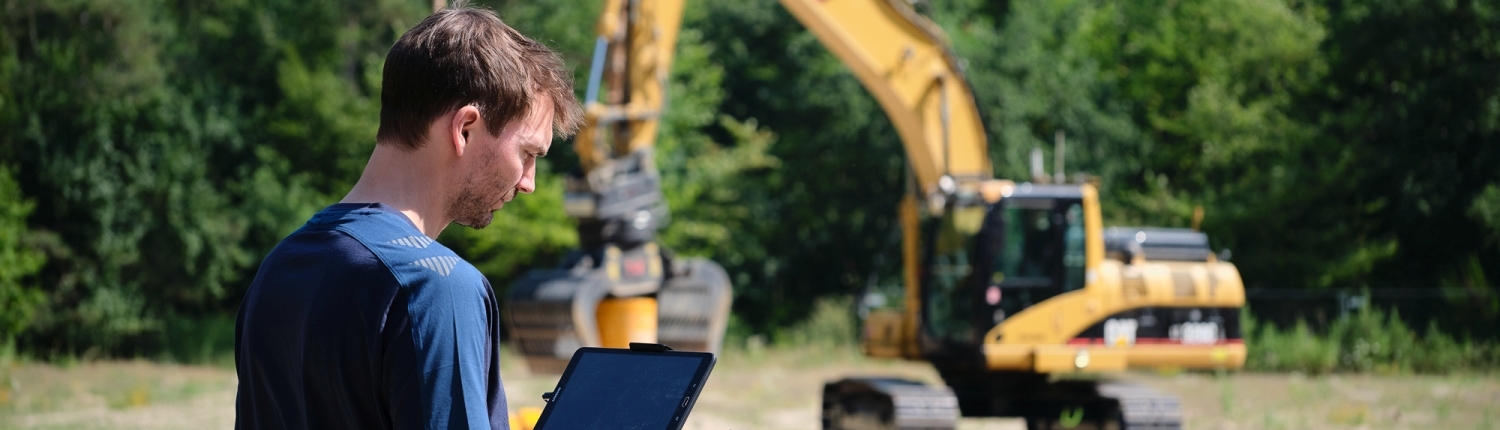
Radiation protection and decontamination

Radiation protection

The primary task of KHG’s radiation protection specialists is to evaluate critical situations and minimize the attendant hazards. For this they have a wide range of equipment at their disposal, plus ample technical knowhow.

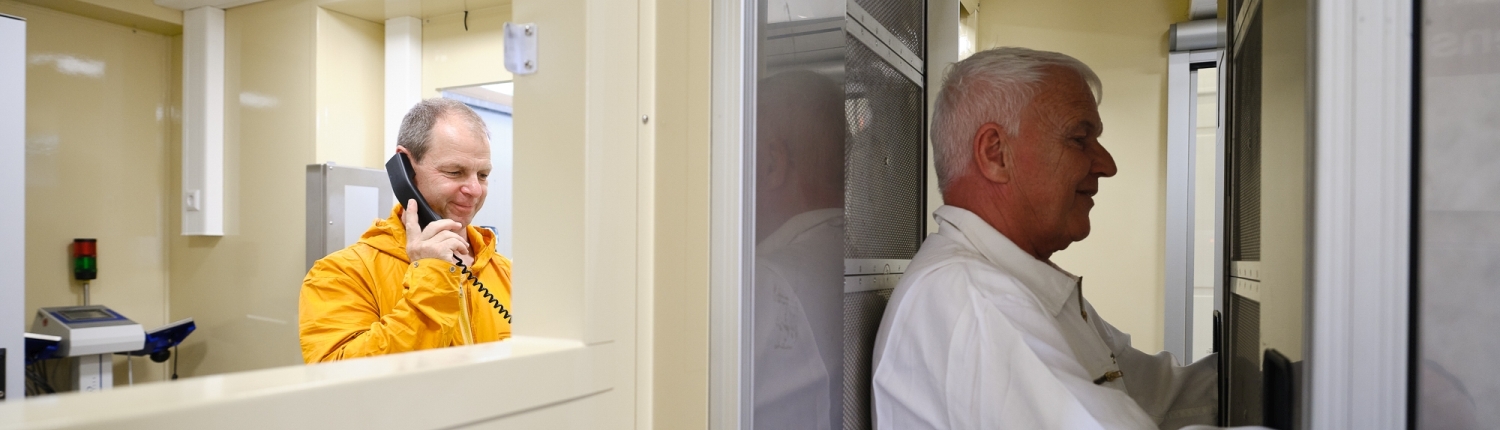
One of the key tasks of KHG is radiation protection. Its experts must measure the radiation dosage of emergency responders and minimise their exposure. For this purpose they use official dosimeters and electronic dosimeters. If ingestion or absorption of radioactive material is suspected, they check for this using a mobile in vivo measurement system (body counter).

Another important task is to assess the radiological situation after the release of radioactive substances. KHG’s experts pass the results of their appraisal to the crisis management team at the facility involved, which must immediately take measures to protect the population. KHG also provides support to responders by carrying out additional measurements and supplying them with personal protective equipment.

Besides maintaining their own readiness and taking care of special equipment, KHG’s employees are responsible for providing regular in-house training to a team of internal and external experts who are on-call duty.

Decontamination

KHG’s decontamination specialists are responsible for reducing and eliminating hazards. The company stocks a wide range of equipment, including personal protection equipment, and is continually upgrading it.

Handling of radioactive substances can lead to contamination of people, equipment and surfaces. This contamination must be limited and removed by trained personnel in order to avoid threats to humans and the environment. The KHG decontamination team is responsible for keeping its extensive equipment pool in good working order, designing new devices and adding them to the existing equipment range. It stocks and regularly maintains a suitable collection of protective equipment, clothing and respiratory devices for emergency responders. The decontamination team’s work also includes training of KHG employees and external operatives.

IT infrastructure and radiation protection

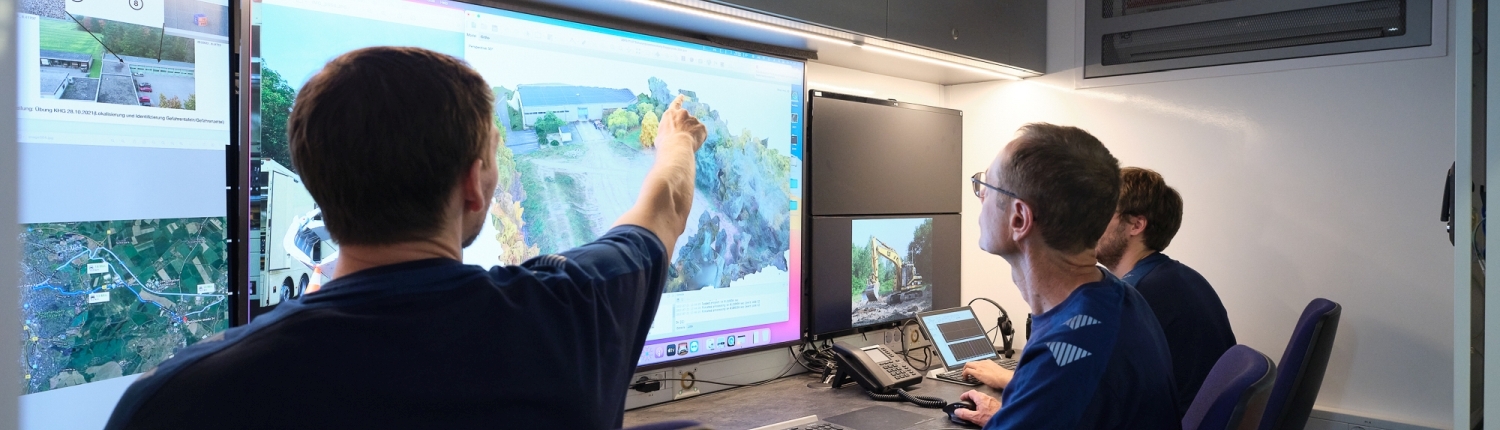
In an emergency it is necessary to deal with large quantities of measurement readings and data. Experts at KHG collect, store and transmit this information by means of a special IT infrastructure.

Many kinds of data must be collected in an emergency, including individual dosage levels and measurements of radiation in the vicinity of a plant. These values must not only be reliably recorded and saved, they must also be transmitted to other parties and displayed in a clearly readable form. KHG has developed a special IT infrastructure for this purpose. Its employees are trained in the operation, maintenance and improvement of this infrastructure and have the required skills in radiation protection, IT applications and transmission of data. KHG teaches these skills to its own employees and those of other companies.

Technical equipment

Remote handling

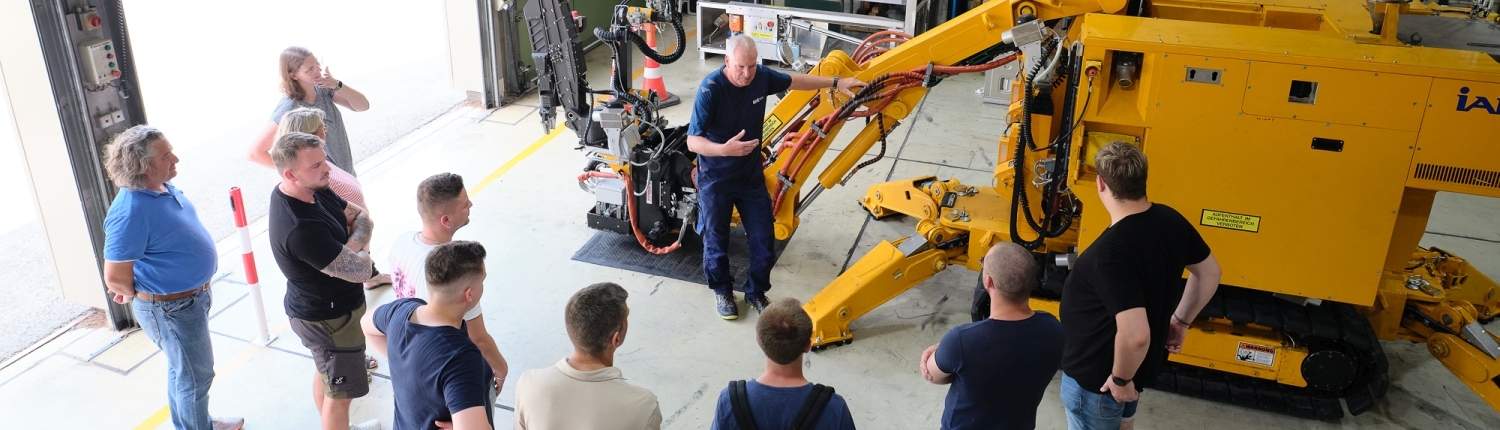
KHG’s employees are able to operate many different remote-controlled systems for inspecting locations with high radiation levels and performing work there.

Decision makers in an emergency initially receive detailed information on the situation from various special vehicles, state-of-the art mobile robots and airborne systems (such as drones). This is the basis for the deployment of remotely operated equipment, ranging from small indoor systems for light handling to large earth-moving machinery. In addition to systems like those for explosive ordnance disposal and defusing bombs, KHG has machines that are able to operate in environments with high levels of gamma radiation.

These systems are operated from mobile control stations. Depending on the complexity of the task, the work must be performed by a single operator or by a team consisting of operators, system managers and supervisors. This requires highly specialised knowledge. Employees must be thoroughly trained by means of practical exercises in handling the equipment. Additional skills, for example with mechanical, hydraulic and electronic systems, are needed to keep the manipulators working properly.

IT and radio systems

KHG has a variety of systems for reliable communication in the event of a partial or total failure of the public infrastructure.

In deployments KHG relies on mobile phones, satellite phones, its own TETRA trunked radio system and an LTE cell based in the deployment area. Radio masts on trailers or truck chassis ensure reliable operation. In addition to the KHG employees responsible for selecting and operating these systems, all members of the company have been trained in their use.

Electrical power

KHG has a wide range of generators for supplying electrical power to emergency equipment.

KHG is able to provide the right power generators for any situation. These range from portable special-purpose units all the way to diesel generators. KHG can supply electrical power for an entire tent city or for container-based housing. All of its generators can be loaded onto vehicles at the place of deployment or are on drawbar trailers for transport. These power supply systems are maintained by qualified electricians, and all KHG employees know how to operate them.

Vehicles

KHG is capable of transporting its equipment to any location in Germany in order to help the operators of nuclear plants deal with hazards in an emergency.

KHG operates a fleet of cars, vans and trucks for this purpose. The machinery, control panels and other equipment needed for deployment are either permanently attached to the vehicle body or are kept in removable containers. Besides being trained in their areas of specialisation, all of KHG’s employees are qualified drivers. In addition to personnel from external transport companies, they can be called upon for driving tasks.

Business management and organisation

Business management and organisation

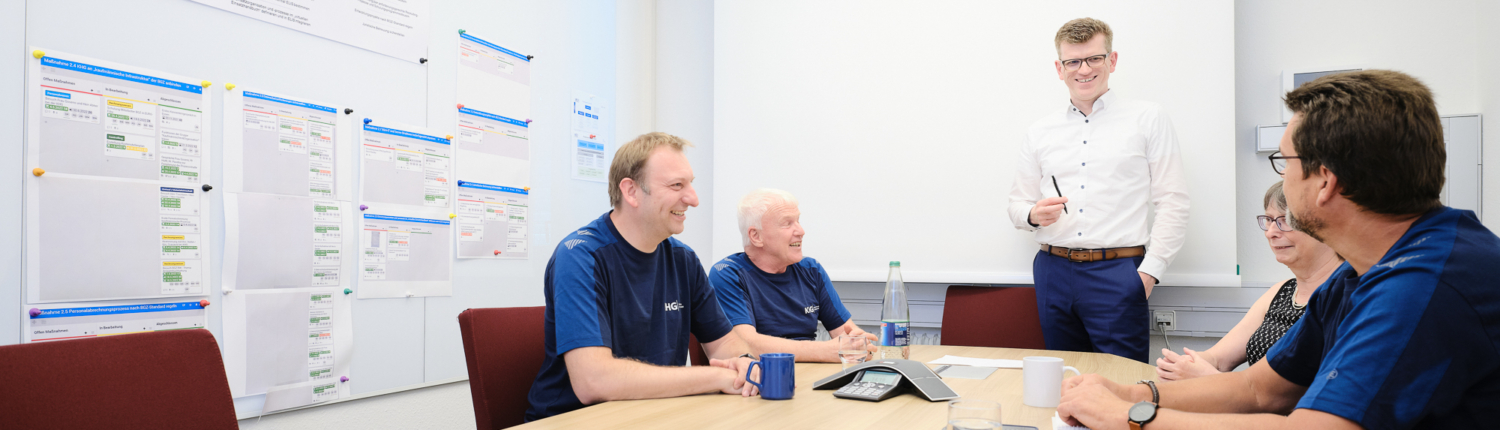
This team is in charge of financial, human and physical resources in accordance with KHG’s policies and strategy.

The employees in this area are responsible for planning, management accounting and HR management.

They also deal with organisational development, materials management, infrastructure maintenance and upkeep of the necessary office IT systems. A further activity is organisation of deployments. In an emergency they assume back-office functions and manage the logistics of staffing and material replenishment. They also fill posts at KHG’s deployment headquarters in Eggenstein-Leopoldshafen.

Training and instruction

Training and instruction

KHG’s employees develop and maintain their skills through a series of steps. This starts with general training, continues with detailed instruction on the use of equipment and is followed up by means of annual refresher courses.

In addition to their professional training, employees are prepared for emergency deployment in training courses provided by internal and external instructors. They also receive instruction in the use of the special equipment assigned to them. KHG staffers and external experts explain how to operate, maintain and repair each piece of equipment. This training is offered several times a year for the various kinds of equipment and takes the form of one-week or two-week courses. The coordination of emergency deployments is taught by means of practical exercises in a nuclear plant, on the premises of a partner or on KHG’s own premises.

Teaching and cooperative agreements

Teaching and cooperative agreements

Emergency service organisations with rare and special responsibilities must keep the big picture in mind by extending and sharing their knowledge. For KHG, cooperation with national and international partners is an important part of this.

KHG’s employees serve as instructors at the Center for Advanced Technological and Environmental Training at the Karlsruhe Institute of Technology, the Baden-Württemberg Cooperative State University and the Chamber of Industry and Commerce. They also share information with experts at the national and international levels through cooperation with the Association for Radiation Protection, the Emergency Management Protection Committee of the German Commission on Radiological Protection and the VGB Working Group on Emergency Management for Nuclear Power Plants. Practical aspects are emphasised through participation in collaborative studies for measurement of radiation, partnerships in research projects and assistance by KHG experts as referees in robot competitions.

In Germany, KHG has cooperative agreements with the Federal Office for Radiation Protection and the state ministries responsible for environmental affairs. Internationally, it works on a contractual basis with the French emergency response organisation Groupe Intra and conducts joint training courses and exercises with a view to possible collaborative deployments. In addition, it holds joint events with international organisations in nuclear technology.

© 2022 - Kerntechnische Hilfsdienst GmbH (KHG)
Skip to content